
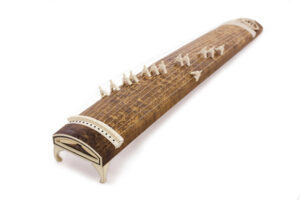
Did you know that the koto, a traditional Japanese musical instrument, actually comes in various types? Beyond the commonly seen 13-string koto, there are many different varieties based on the number of strings, size, and purpose. This article provides a comprehensive introduction to all types of koto and their distinctive features!
1. Thirteen-String Koto (Jūsan-gen)
The Most Common Type
Characteristics:
- Number of strings: 13
- Length: Approximately 180 cm
- Weight: About 7-8 kg
- Range: Approximately 2.5 octaves
Uses:
- Suitable for everything from classical to contemporary pieces
- The foundation of koto music
- The instrument beginners typically start with
Representative pieces: “Rokudan no Shirabe,” “Haru no Umi (Spring Sea),” “Chidori no Kyoku”
2. Seventeen-String Bass Koto (Jūnana-gen)
Large Koto for Low Register
Characteristics:
- Number of strings: 17
- Length: Over 200 cm
- Weight: About 10-12 kg
- Range: One octave lower than the 13-string koto
History:
- Invented by Michio Miyagi in 1921 (Taishō 10)
- Functions like a bass or cello
Uses:
- Handles the bass section in ensembles
- Expresses deep, rich tones in contemporary music
Distinctive Sound: Deep, resonant bass tones
3. Twenty-String Koto (Nijū-gen)
Modern Koto with Extended Range
Characteristics:
- Number of strings: 20
- Range between 13-string and 17-string kotos
- Covers a wider musical range
Uses:
- Contemporary music performance
- Enhanced expressiveness in solo performances
- Collaboration with orchestras
4. Twenty-Five-String Koto (Nijūgo-gen)
Koto with the Widest Range
Characteristics:
- Number of strings: 25
- Wide range (approximately 4 octaves)
- Piano-like expression possible
History:
- Developed by Keiko Nosaka in 1969
- Created to bridge Japanese and Western music
Uses:
- Arrangements of classical music
- Experimentation with jazz and pop
- Experimental contemporary music
5. Short Koto (Tan-goto)
Compact, Portable Koto
Characteristics:
- Number of strings: 13 (typically)
- Length: Approximately 90-120 cm
- Weight: About 3-5 kg
Uses:
- Performance on the go or practice while traveling
- Educational purposes for children
- Performance in limited spaces
Advantages:
- Lightweight and easy to transport
- Requires minimal storage space
6. Bunka-goto (Cultural Koto)
Entry-Level Koto for Beginners and Education
Characteristics:
- Number of strings: 13
- Length: Approximately 160 cm (shorter than standard koto)
- Weight: About 5-6 kg
- Relatively affordable price
Uses:
- School education
- Beginner’s introduction to koto
- Those who want to start playing casually
Advantages:
- High cost-performance
- Manageable size
- Easy maintenance
7. Eighty-String Koto (Hachijū-gen)
Specialty Koto with the Most Strings
Characteristics:
- Number of strings: 80
- Very large size
- Extremely wide range
Uses:
- Experimental contemporary music
- Performances seeking special acoustic effects
- Exhibition and research purposes
Note: More for exploring musical possibilities than practical use
8. One-String Koto (Ichigen-kin)
Rare Koto with Single String
Characteristics:
- Number of strings: 1
- Length: Approximately 100-120 cm
- Simple structure
History:
- Ancient instrument introduced from China
- Mainly played as a hobby by literati
Playing Method:
- Press the string with the left hand, pluck with the right
- Unique, elegant tone
9. Three-String (Sangen) / Shamisen-Type Koto
Koto Played Like a Shamisen
Characteristics:
- Number of strings: 3
- Hybrid between shamisen and koto
- Played with a plectrum (bachi)
Uses:
- Accompaniment for folk songs and popular music
- Experimental musical expression
Comparison Table by Type
| Type | Strings | Length | Range | Primary Use |
|---|---|---|---|---|
| 13-String Koto | 13 | ~180cm | Standard | Classical to contemporary |
| 17-String Bass Koto | 17 | ~200cm | Low | Ensemble bass section |
| 20-String Koto | 20 | ~190cm | Wide | Contemporary/Solo |
| 25-String Koto | 25 | ~200cm | Widest | Classical arrangements/Jazz |
| Short Koto | 13 | 90-120cm | Standard | Portability/Practice |
| Bunka-goto | 13 | ~160cm | Standard | Beginners/Education |
| 80-String Koto | 80 | Large | Ultra-wide | Experimental music |
| One-String Koto | 1 | ~100cm | Limited | Classical/Hobby |
Which Koto Should You Choose? Recommendations by Purpose
For First-Time Learners
→ Bunka-goto or 13-String Koto
- Bunka-goto if keeping costs down
- 13-string koto for serious, long-term study
For Serious Classical Music Study
→ 13-String Koto (high quality)
- Practicing on a good instrument is key to improvement
For Contemporary Music and Ensembles
→ 17-String Bass Koto or 20-String Koto
- 17-string for band or orchestra collaboration
- 20-string for wide-ranging solo expression
For Those Prioritizing Portability
→ Short Koto
- Practice while traveling
- Convenient for performances on location
For Experimental Music
→ 25-String Koto or 80-String Koto
- Musical expression beyond traditional genres
Conclusion
The koto comes in diverse varieties, from the traditional 13-string to the experimental 80-string instruments. Each type has its own unique characteristics and charm, allowing you to choose based on the music you want to play and your intended purpose.
For beginners, we recommend starting with a bunka-goto or 13-string koto, then exploring other types as you become more comfortable!
The world of koto is profound, and simply changing the number of strings greatly expands the range of musical expression possible. Find the koto that suits you and experience the beauty of traditional Japanese music.